Search Results
Search this site
564 results found with an empty search
- Porsche 917 by Dave Adams Automotive Images
Porsche 917 by Dave Adams Automotive Images http://ow.ly/JNwD50EAfEp
- Ferrari 330 P4 by Riiko-Andre Nuud Photo
Ferrari 330 P4 by Riiko-Andre Nuud Photo. https://riikophoto.com/automotive
- Ferrari F40 by Drehwerk
Ferrari F40 by Drehwerk
- Lancia Flaminia Sport Series 1 by Zagato by Raphaël Belly Photography
This is one of the 99 Lancia Flaminia Sport Series 1 by Zagato – a fabulously elegant and aerodynamic lightweight aluminium body, with its iconic ‘double-bubble’ styling and covered headlights. With a Lancias revered 2,458 cc V-6 engine designed by engineer Francesco De Virigilio. Flaminia Sports are considered today the holy grail of Flaminias. Photo by Raphaël Belly Photography
- “Alleggerita” — A Limited Edition 3 Volume Book on the Alfa Romeo GTA
A set of three volumes that tell all the facets of the historic Alfa Romeo car, "Alleggerita" is the masterful work of Tony Adriaensens, Patrick Dasse and Martin Übelher, published by Dingwort Verlag. Check it out here. Don’t let the name fool you. The Italian term “alleggerita” may translate to “lightweight”, but the respect it demands in the racing world punches far beyond its weight class. The Gran Turismo Alleggerita was introduced to the world in 1965, just two years after Autodelta SpA became the official competition department of Alfa Romeo. The GTA was based on the 1963 Alfa Romeo Giulia Sprint GT, the sports version successor to the immensely popular Giulietta series. The success of the “Alleggerita” was almost immediate, claiming places one through seven at Monza. In the following years, the GTA was a staple of podium finishes on both the European and American racing scene. Through the high precision and performance of the GTA, she helped build the stock of a number of legendary drivers. Names like Andrea De Adamich, Ignazio Giunti, Nanni Galli, and Teo Zeccoli all raced behind the wheel. But we’re not here today to tell you the full story of the Gran Turismo Alleggerita. We’ve already found three people who have done a far superior job in detail, imagery and dedication. “Alleggerita” is a three volume, limited edition tome by Tony Adriaensens, Patrick Dasse, and Martin Übelher. It may be lightweight in name, but not in nature. This work represents a true collector’s item for Alfa Romeo passionistas. There are only 3,000 editions in English, and 1,500 in German with each one numbered. “Alleggerita” is limited edition after all. And on top of this, just to make things more special, Books corresponding to edition numbers to the GTA / GTAJ / GTAm VIN numbers will be reserved for the owners of the cars! Since first impressions count, here’s the first impression of “Alleggerita”: It’s beautiful. Simple and minimalist on the outside, the three volume box-set of elegant white books comes in a cardboard, handled box for ease. It's simplicity at its finest really. No fuss, just effect. With 1,456 total pages, and 1,700 images in both colour and black and white, these historians of racing have tunnelled the depths of the GTA story and emerged with a treasure trove of information, documentation and entertainment. Volume One tells the story of the evolution of the GTA / GTAJ / GTAm and the race history of the cars, focusing on the above mentioned European Touring Car Challenge. Volume Two is all about the little details. It includes all the technical documentation and homologation papers of the TZ / Giulia TI Super / GTA / GTJ / GTAJ / GTAm. On top of this there are the original Alfa Romeo documents (in English), detailing the technical characteristics of the GTA and the GTA 1300 Junior. In addition to this, the creators have added an extensive collection of photos of the original parts for these cars. And finally there’s Volume Three, the detail of which blows us away. Simply titles “Alleggerita – Register”, it’s exactly what it says it is; a register of all known and verified GTA / GTJ / GTAJ / GTAm cars. It’s a relief to us at SpeedHolics to know that out there, every single day, there are people like Tony Adriaensens, Patrick Dasse, and Martin Übelher. Check out “Alleggerita” at publisher Dingwort Werlag: https://dingwort-verlag.de/en/alfa-romeo/4/alleggerita-english-edition
- The Cape Winelands, Lamborghinis & “Bakkies”: An Interview With Photographer Peet Mocke
Peet Mocke has a standout resume in the classic motorsports photography industry. At just 36 years of age, the South African has worked for Lamborghini, Volkswagen, Land Rover / Jaguar and Hyundai, as well as Max Power and CAR Magazine. All images by Peet Mocke (IG @peetmocke_) We came across Peet’s work while one of the SpeedHolics team was plotting a visit to the Franschhoek Motor Museum, just an hour outside of Cape Town. In a country of seemingly endless highways, dirt roads and awe-inspiring mountain passes, the 4x4 and the “Bakkie” rule the roost. (“Bakkie”, by the way, is a South-African-ism for a pick up truck or utility vehicle). So coming across a vast collection of pristine classic cars is a pleasant surprise. Peet has been on multiple shoots with the Museum’s stunning collection. Owned by renowned South African business tycoon and billionaire Johann Rupert, it showcases over 100 years of regal motoring history. Needless to say, they only hire the best photographers to shoot their collection. A quick scroll through Peet’s Instagram feed shows you the level of his talent & vision, as well as the calibre of the cars he spends his time capturing. But take note, a “quick scroll” swiftly turns into a deep dive. We caught up with the man himself recently in Cape Town to learn some more about him and his work. SpeedHolics: Tell us about your upbringing and how you got into professional photography? Peet Mocke: I was born in a small town called Worcester, about 120 kilometers northeast of Cape Town, South Africa. We moved around a bit as a kid, but never to big towns. My childhood saw me living in Caledon and then Bredasdorp, both small industrial and agricultural towns in the rural Western Cape. But after finishing school I moved to the city, to Cape Town, to study photography at college, and I’ve been here since then. It’s been 18 years now. SH: And how did you get into motorsports photography specifically? PM: After my studies I did a two week internship at Media24 (South Africa’s leading media company). Then six months later, they offered me a job as an assistant. It seemed a great starting place so I took them up on the offer. At that time, Media 24 had most of the popular car magazines under one publishing company, and so that was my big break. I learned the ropes under (acclaimed photographer) Jacques Stander. Soon after came my very first shoot for Max Power. The car? A black Fiat Uno. Since then, I’ve been very privileged to shoot for CAR magazine, as well as the likes of Lamborghini, Porsche & Land Rover / Jaguar. SH: Can you sum up your favorite thing about shooting cars? PM: It’s always a challenge, not knowing what the end result is going to be. Even now, I’m always nervous before a shoot. But my favorite thing is the end result. The car is just such a beautiful creation that all I want is to do it justice -- to make it look as beautiful as possible under the circumstances. SH: You’ve traveled a lot for shoots around Southern Africa. Any favorite locations? PM: Franschhoek (The Western Cape Winelands town where the Motor Museum is located) is definitely one of my personal favorites. The landscape is just beautiful. There’s the stunning mountain backdrop, and the mountain pass itself makes a fantastic location for shooting cars in motion. But one of the things I love about shooting on location is the unknown. That’s why I really enjoy working in places I’ve never been before. It’s like a SH: Tell us about a shoot that you’ll never forget. PM: Where to start? There are just so many. In 2018 I had my very shoot with Lamborghini. We had these three amazing machines, and a brief to capture them with Table Mountain (in Cape Town), in the background. That was a real learning experience. Also when I worked for adventure motoring magazine Leisure Wheels, we went on some incredible road (and off-road) trips to unforgettable places like Namibia and Lesotho. Finally, my first shoot at Franschhoek Motor Museum. That was for TopCar Magazine, and we were working with a Ferrari F40. Not a lot of people ever get that kind of opportunity. SH: Lastly, let’s talk about cars—past, present & dream cars. PM: I have always been a bakkie guy! I love shooting classic cars, but for day to day it’s hard to beat a bakkie. My first ever car was a little Toyota Jazz, and ever since then I’ve only driven bakkies. My dream car is the pretty humble Toyota Hilux, and luckily I have one. It’s my pride and joy! But, if money was no object… I’d be looking for an Audi RS6 Avant, or a new Land Rover Defender 90. Keep up to date with Peet's phenomenal work at peetmocke.com, or Instagram @peetmocke.
- When I met Enzo Ferrari
Today marks the start of a series of articles telling of the many famous names of the car world that I have had the honour and pleasure of meeting throughout my professional life. And who to start with, if not the Man himself: Enzo Ferrari. Photos by Luigi Marmiroli Archive Rivers of ink have been used to write about Ferrari, and in future who knows how many millions of words will be devoted to him on the web. Here I don’t want to add anything to his official biography, but I would like to share some memories of the time I spent working in the “Gestione Sportiva”, the Racing Department of Ferrari Automobili, soon after graduating. Due to some unfathomable twist of fate, I was born on a farm very close to where, in 1972, the Fiorano Race Track was built and where, having completed my studies, I found myself working soon after it was inaugurated. In the centre of the track there was a small building, right next to the famous house with red shutters, where Ferrari often went for a siesta after lunch. The emergency vehicles were housed here, on the ground floor, and there were two rooms on the first floor. Ferrari had called this place the “Studies Office”; a forerunner of the “think-tank”, where the future road and racing cars were designed. I had just graduated from the University of Padua, and I began to work in a factory that produced spare parts for tracked vehicles, but when I was called for an interview at Ferrari I literally fled that company. Entering the room where the “Great Old Man” was, I was a bag of nerves. Ferrari was half a century older than me. As he invited me to sit down in a chair in front of his very modest desk, I instantly thought of all the famous drivers, politicians, actors and even royals who had sat in that chair before me. Everyone knew that, like the Pope in Rome, Ferrari never left Maranello, and anyone who wanted to meet him had to go to his court there. He welcomed me, showing me a painting on the wall lit by two red glass rose-shaped lamps below, with a slightly cemetery-like appearance. The painting was of his son Dino, who had died many years earlier when he was the same age as me. I found out later that when he hired young engineers, this always brought back terribly painful memories for him. Afterwards, aroused from his thoughts, these are the exact words he said to me: “Mr Marmiroli, would you like to see the Ferrari races on the tracks around the world?”. Blushing up to my hair, I timidly stuttered, “Yes, I would like that very much”. Leaving the interview, I was both bewildered and exhilarated, and that feeling stayed with me for the whole period I spent in the Studies Office. It stayed with me for seven years. When I went back into that office to hand in my notice, I sat in the same chair and saw the picture of Dino still hanging on the wall, lit by the same glass roses. Ferrari was very disappointed about my decision. I honestly knew that he felt that way about anyone who left the company. His parting words were: “Mr Marmiroli, you can leave, we are equal: you have given something to us, and we have given something to you”. He was completely right. My experience at Ferrari Automobili was to all extents and purposes like a second, hands-on degree in ”Car Building”. I never met Ferrari again, but he always wrote and thanked me personally for the birthday wishes I sent him every year. I still jealously treasure his replies. Walking into the historical centre of Modena from my house, I always passed beneath the large windows of his home: they were always covered by heavy curtains or even shutters. Except one time. On 14th August 1988, I saw that the windows were wide open and the curtains pulled back. I knew that the “Commendatore” was not well, and in fact a couple of months earlier he wasn’t even able to welcome Pope John Paul II, who had come to Marenello and the track in Fiorano to meet him. I suddenly had a very bad feeling. The news of Enzo Ferrari’s death came a couple of days later, after the funeral, just as he had wished. Writing these memories, I took out his notes once more, and I observed that, over the years, his signature, written as always in his hallmark purple ink, had become less and less certain.
- Mercedes-Benz 300 SL by Drehwerk
Mercedes-Benz 300 SL by Drehwerk.
- Classic Cars, Everlasting Love and "Perfect Teeth": an interview with Dr. Thorsten Montag
At SpeedHolics, we spend a lot of time on Instagram, gazing at beautiful cars in beautiful surroundings. And that’s precisely how we came across Dr. Thorsten Montag. Photos by Thorsten Montag (IG: @fantomas_ds) We were stopped in our tracks not only by a reel of stunning cars but by his perfectly captured angles, color tones, and backdrops of Berlin’s striking modernist architecture. We’ll also fully admit that the recurring use of just one eye catching model made us curious. So we did what we always do at SpeedHolics - we reached out for a quick chat. And it was a great one, with our subject proving to be a man of many, many talents. Here’s what Doctor Montag had to say: SpeedHolics: Tell us a little about yourself, Doc. Dr Thorsten: I’m a dentist, and I live in Berlin. I’m a father of four girls, and husband to an amazing, beautiful wife. SH: So the woman in your images is your wife? How did you meet? DT: Yes, that’s Ira, my favorite and only model. We met 15 years ago when she came to my dental practice. I fell in love instantly. She was studying computer science at the time, so I asked her if she could build a website for my clinic. She went on to work for a lifestyle magazine, and for two years the two of us travelled around the world shooting fashion and travel features for the magazine. SH: Incredible. You have some amazing cars in your shots. Are they yours? DT: Indeed. I own three classic cars. A Maserati Indy, a Citroen DS Convertible, and a Citroen DS Limousine. I’ve had the Citroens for a long time. I bought the Limo in 1994, and the Convertible in 2004. The Indy is a pretty new addition—bought in 2019. SH: Why these particular cars? What was it that compelled you to own them? DT: Since I was young I’ve been fascinated by the Citroen DS. I saw them all the time in French movies starring the likes of Louis de Funès, and back when I was a little boy they seemed to be all over the streets of Berlin. There’s something about their design and their historical pull. Driving the DS is like hovering around in a gentle little spaceship. The Indy is a whole other story. The complete opposite in fact. It’s fast and flat. It’s got that quintessentially Italian temperament. Truth be told it was a more compulsive buy. I saw an Indy in real life for the very first time about five years ago, but I was immediately enchanted by that huge, elegant body. It’s really a lot bigger than it looks in the pictures. SH: We noticed that, aside from Ira, your shots are very architecturally influenced. Tell us a little about this. DT: That’s right. It’s a Berlin thing. You must remember that when the Berlin wall came in down in 1989, it left a huge opening for architecture. The “Death Strip” ran through the geographic center of the city, so its destruction allowed some of the best architects on the planet to come and begin from scratch right in the middle of the reunited city. In a way that’s an architect's dream, to begin at point zero in some place significant. It’s made for some really great buildings and places to shoot. SH: Tell us about your process and setup for shooting your cars. DT: I use a Canon 5D Mark II, or an iPhone 11 pro. The quality of shots on both are really stunning. As you’ve already seen, I feature a lot of architecture in the background of my shots to contrast and compliment the shape and color of the cars. I usually begin shooting very early on Sunday mornings, around 6 AM. That’s when the city is still asleep, and there’s this special atmosphere around this beautiful, empty city. No traffic, no noise. The drive is beautiful, and the light is just right. SH: Outside of dentistry, family life and car photography, what can you be found doing? DT: Driving of course! But riding motorcycles as well. I have three beautiful old motorcycles to compliment my cars. I’ve got a Moto Guzzi Le Mans, a Triumph Tiger, and a BMW R80. I also travel as much as possible, go mountain biking, and relax by playing Spanish and Latin American Guitar. SH: A man of many talents and interests! One final question. Where can our readers find your work? DT: Follow me and my work on Instagram @fantomas_ds
- Yes, I am a Speedholic!
Hi there, fellow SpeedHolics. Speed is my stimulus, my challenge, my way to get outside of and away from the box. For me, speed is synonymous with competition. It's also a big part of one of my earliest childhood memories. I was six, maybe seven years old, and with my friends we did a lot of things that would be considered really crazy today. But some context is needed first: I was born in Civenna on March 11th, 1943 above Lake Como, just a stone's throw from the mountain pass on Madonna del Ghisallo. That stretch of road is best known for cyclists as many prestigious races pass through there, including the Giro d'Italia. We kids, crazy as were, tried emulating the great two wheeled racing champions by throwing ourselves down that traffic prone, unpaved road in our trolleys, dodging cars and potholes and stray rocks with little more than daring and a good helping of fortune. We built the trolleys ourselves, with a wooden axle and old ball bearings begged from the local mechanic for wheels. The Axle? A broomstick with two nails pointed sideways at such an extreme angle that any surge of turbulence on the downhill run could rip the bearings off. When we reached the bottom and ran out of momentum, up we'd come again, sticking to the cyclists who trained along the pass. Great champions trained there too: I remember Fausto Coppi and Gino Bartali well. I knew them all. The problem was getting home, with the marks and scars of our challenges on the knees of our pants and on the elbows of our sweaters. It happened there, on those trolleys launched towards the bowels of Madonna del Ghisallo, that the rush of velocity began to flow in my veins. When I was fourteen, my father gave me a DEMM 48 and I started doing motorcycle races in village festivals. For those of my generation, the DEMM is a kind of myth. It took little effort to reach 80 kilometers per hour, and had a system where its bicycle pedals, common to all mopeds at the time, could be locked in a certain position -- turning them into de facto motorcycle cranks. Then came another motorcycle, the Iso Moto, and finally came the car. My first real race was at Monza on November 24, 1962, behind the wheel of my Alfa Romeo Giulietta Spider 1300 Veloce. I took the caps out of the rims to make more of a visual statement, and took the terminal to make more noise. I didn't know this would affect my performance. But it didn't matter -- I was a pilot. I was a race car driver. Fifty-nine years later, I can honestly say I'm a lucky man. Not only did I experience the boldest and most beautiful era of racing first hand and come out alive, I've also never stopped racing. Even now at 78 years of age, if I ever think about hanging up my helmet and gloves, I become filled with that same old passion for speed, for velocity, for the thrill. It keeps me alive. It keeps me young. I can't help it. You can call me a SpeedHolic. Photo Credits: Girardo&Co.
- Speed and Cars
Speed and cars have always been strictly connected for me. When we were small kids, the first and most important parameter with which we judged and compared different cars was their maximum speed. We would look inside every parked car looking for the highest number at the end of its speedometer's scale. I still remember my utter disillusion when I learned later that it did not correspond to the actual maximum speed of a car ! I would often encourage my father to overtake cars in front of us and when it was possible he would, just to make me happy. He wasn't particularly passionate about cars but he taught me to drive early and he would patiently support my interests. I remember the sad feeling of oppression and grave limitation of personal freedom when the first speed limits were introduced following the oil crisis in 1973. When I was 13 and my father with my older brother went for a longer trip (to Italy), I was given the duty of starting the engine of our family car “every now and then” and letting it idle for some minutes, just to keep it efficient. I eagerly accepted this pleasant responsibility. The vague “every now and then” soon become every other day if not daily. With conviction that not only the engine but also other organs of the car would benefit from an exercise, I gradually extended my routine to climb the ramp out of the garage and later to go out of the courtyard onto a narrow street in front of our house. Next I would go backwards, every time a little more, down the street. Soon I would go down till the bottom of the street and drive back up, going through the gears. Every time I was trying to shift a little bit faster and on higher revs, with a glance on the speedometer before braking, every time a bit later and a bit harder before reentering the garage... It felt so good ! Little later I would gladly offer myself to accompany my father on otherwise boring visits to my grandparents living in another city and as a reward I would be given an opportunity to drive on parts of the return trip with little traffic. It was a win-win situation, everybody was happy. At the time I got my driver's license, a day after my 16th birthday (I've already mentioned my father was supporting my passion...) I was able to adjust the ignition timing and valve clearance. I would perform it more often than necessary because I liked it and because it was a perfect excuse to perform a “necessary” road-test after ! I had my preferred “test-track": nothing more than a long stretch of road with no crossings or houses around. I would drive it first normally, to check if there was any police car with a radar or any other unpredictable danger factor and to get the oil temperature right. Then back, at full throttle ! I bet you are all familiar with that addictive, sublime pleasure of driving most any car at full speed... And the fulfilling satisfaction of listening to the ticking sounds of the hot engine cooling down, mixed with growing smell of brake pads once back in the garage... And it doesn't matter that all those emotions were granted by cars that wouldn't even reach 60 HP... I have never managed to realize one of my childhood dreams to drive a real race car in a real race but I've always enjoyed a fast open road driving, something that's becoming more and more difficult to do in safety but fortunately still possible and for that reason even more precious on those few occasions. As a car user, I have always considered speed as one of important practical characteristics of a car which, in principle, should get you from A to B in safety in shortest time possible... But if it's able to give you pleasure in doing it, so much the better ! As a car designer, I was lucky enough to work for the Centro Stile of Alfa Romeo, a make that in its long and rich history, was able to blend better than anyone else, the practicality with speed. There were a lot of more practical, usually quite mundane cars and there were some faster cars but none could offer you a thoroughbred race car technology in unaffordable and every-day usable car. And that was true for the entire production range, not only for some exceptional, highly tuned limited edition specials. So you can imagine my excitement but also a sense of responsibility to preserve the continuity in this noble Tradition. Regarding myself a designer rather than a stylist, I wanted every new Alfa as efficient as possible, where every formal and aesthetic solution would result from a real technical requirement. I wouldn't be satisfied to just stay within the limits, I wanted to reach and possibly extend them because that's the only way to progress, just as you do when you design a race car! After all, for me a real Alfa Romeo has always been just that: A race car “civilized” just enough for a practical but spirited road-use.
- Lartigue: The Photographer Obsessed with Speed
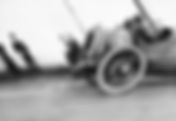
Photo by Jacques Henri Lartigue © Ministère de la Culture (France), MAP-AAJHL Stop the moment, capture the movement, freeze and yet illustrate the speed. If you think about it, photography is a great paradox. And yet, for over a hundred years, still and silent frames have been telling us of the heroic deeds and risks of drivers and their tempestuous motor vehicles. It is in the face of an apparently impossible challenge that the inspiration arises. And the challenge - even if it were "capturing" an elusive racing car in the narrow margins of a frame - is what has ignited ingenuity and stimulates human creativity from the very beginning. This page was created to celebrate photographers who aim, or have pointed, their lens towards the world of motorsport. True authors who have contributed to writing its history by knowing how to grasp the right "fractions of a second". In other words, to imprint in our minds and hearts those moments that ignite and unleash passion. There is one photograph in particular, which has become a real icon and many consider the beginning of everything. It dates back to the 1910s and portrays a racing car. The extraordinary fact is that - perhaps for the first time - a static image is able to convey a sense of speed. How? It's a story worth telling. The creator is a young and multitalented boy from the French upper class who responds to the name Jacques Henri Lartigue (1894-1986): he is not even twenty when he takes the image that will put him - although he never considers himself a real professional - among the greats of photography. Painter, photographer, writer but above all artist and experimenter, Lartigue grows obsessed with mechanics in all its forms. At the age of seven he receives his first camera, at the age of nine he attends a car race for the first time, and at the same time his brother engages in the construction of flying cars in the basements of the family castle. Whether it was a car or an airplane, Jacques Henri is literally bewitched by those modern mechanical creatures. And so he photographs them. His most famous shot is an imperfect image. It is cut, moved and distorted, but it owes its notoriety to this. To the point that - it is said - the same author initially does not even take it into consideration, not understanding how pioneering his actions were when car number 6 passed. Laying at the edge of the road, Lartigue follows the movement of the car in front of him with his 4x5" film camera. A big little miracle: Lartigue improvises the technique that is still used today to express the sense of movement in a photograph. It is called "panning" and consists of the use of a rather long exposure time and in following with the camera the movement of a subject during its run: if the photographer's hand is sufficiently steady and its movement well synchronized, it will define the car’s movement. But there is a fact that makes Lartigue's photography even more special and distinctive. The spectators in the background are leaning to the left, as if they wanted to remain still at that point. The car is instead projected to the right, with the wheel that looks like an ellipse, emphasizing its pace. The deformation is actually a technical phenomenon known as the rolling shutter, accentuated by its large format camera, but this is of little consequence: unnatural but at the same time hypnotic and fascinating, the distortion seems to reaffirm once again the obsession of the French photographer for the speed. On the sidelines of the story, there is also yellow on the actual shooting date. Lartigue traces the image back to the 1912 French Grand Prix. By carefully observing the car, subsequent studies argue instead that it is the 1913 edition: the car portrayed looks like René Croquet's Schneider, tenth at the finish line. It’s a little mystery that will probably remain unsolved forever. It matters little. With this shot Lartigue has worked his magic. Because photography basically does this: it stops a moment and makes it eternal.